Now Enrolling — Augustine’s Confessions: A Psychotherapy Group → May–June 2025  ·  8 spots
Menu
Licensed Professional Counselor | Ph.D. Philosophy

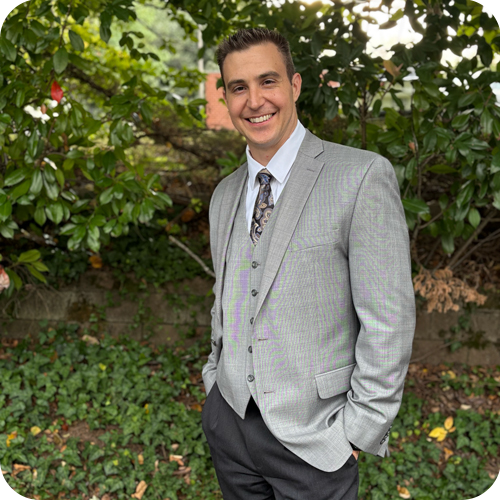
James Bryan

Learn More
About

Bio

James Bryan

I came to counseling after pursuing a career in academia. I loved teaching and working with students to help them understand the great ideas of the Western philosophical tradition. I eventually decided that I could do more good by helping individuals discover the truth about themselves as a mental health counselor. I view the therapeutic process as a collaborative effort between the therapist and the client in which the client comes to a deeper awareness of himself or herself, of his or her history and desires to live more intentionally in the present without being held back by past hurts and traumas. I still love teaching, and I occasionally still adjunct for a couple of local universities.

Credentials

Education & Training

Extensive academic background combining philosophy, theology, and clinical mental health training.

Education

  • Ph.D. Philosophy - The Catholic University of America
  • M.A. Clinical Mental Health Counseling - Northwestern University
  • M.A. Philosophy - The Catholic University of America
  • M.A. Systematic Theology - The Catholic University of America
  • B.A. Philosophy - Cal Poly San Luis Obispo

Specialized Training

  • • Certified Clinical Trauma Professional (CCTP-2)
  • • Comprehensive Resource Model (Level 2)
  • • Internal Family Systems (Level 1)
  • • Cognitive Behavioral Therapy
  • • Psychodynamic Psychotherapy
  • • Safe and Sound Protocol
  • • Rest and Restore Protocol
My Approach

Practice Method

Most people who haven't been to therapy usually ask in the first or second session, "What is mental health counseling and how does it work?"

My reply is usually something like the following: The purpose of therapy is to help them become unstuck and move forward in life. To achieve this end, the therapeutic task consists of two interwoven stages: a dialectic phase in which the therapist and the client work together to build a conceptual model of the client's struggle and then an experiential phase in which the client, with the help of the therapist, faces hurts, pains, and traumas from the past. By experiencing emotions connected to unprocessed events from the past, the client can become free to live more fully in the present. The various therapeutic models offer the therapist and the client different ways to conceptualize the client's struggle as well as numerous tools to facilitate the experiential side of therapy.

I work in a client-centered framework in which I trust that clients already have what is needed inside them to solve the difficulty or problem that they are facing. My job is to provide empathy and the emotional space to allow them to feel what they need to feel and to express what they need to express. My background in philosophy also aids the therapeutic process through my ability to conceptualize and differentiate various aspects of a client's presenting problem, as well as utilize psycho-education at various points of the therapy.

My philosophical and theological background also allows me to explore existential and religious questions with clients. Sometimes, psychological and emotional struggles arise because of unanswered intellectual questions about meaning and the purpose of life. Engaging various texts from the Western canon in a therapeutic setting—works such as Plato's Republic, Aristotle's Nicomachean Ethics, and Augustine's Confessions—can often prove useful for these clients.

My Focus

Areas of Specialization

Primary: PTSD, C-PTSD, Anxiety, Depression, Grief, Shame, Self-Esteem and Self-Confidence, Religious Trauma and Abuse, Christian Counseling, Spirituality

Secondary: Couples Therapy, Communication, Boundaries, Vocational Discernment, Pornography Addiction, OCD, Scrupulosity

Innovative Treatments

Safe and Sound Protocol
Rest and Restore Protocol

The Safe and Sound Protocol (SSP) and the Rest and Restore Protocol (RRP) are members of the new class of auditory treatment techniques and protocols referred to as an Auditory-Based Therapy. Both of these protocols help to regulate the nervous system. The SSP filters music through a patented algorithm to limit the sound of the music to those frequencies upon which melodic human speech is found. In listening to this specially filtered music, the social engagement system of the autonomic nervous system is trained to focus on those frequencies. The RRP works by means of entrainment, in which patterned sounds are utilized to stimulate the natural biological rhythms of the body. In turn, these rhythms help regulate the autonomic nervous system and create a deeper connection to self. Both of these protocols can result in improved response to stress, better emotional regulation, and increased social engagement.

The SSP and RRP both work directly on the body to help decrease symptoms of anxiety, depression, trauma symptoms, chronic pain and fatigue, gastrointestinal issues, learning disabilities, and neurodevelopmental differences—including autism, hyperactivity, and attention.

The SSP and RRP are excellent therapeutic interventions for individuals or couples who feel stuck or who have tried other therapeutic modalities with little or no change.

Public Presentations

Speaking Engagements

I am available for speaking engagements on psychological, philosophical, and theological topics. Here are some examples of talks I have given:

• Plato and the Practice of Philosophy

• Aristotle and the Good Life

• Augustine: The Psychology of Sin and Redemption

• The Christian Life and the Recovery from Shame

• René Girard and Healing Intergenerational Trauma

• Conversion and Transformation of the Self

Common Questions

Frequently Asked Questions

What is the cost of a session?

+

My rates are as follows:

  • 45 minute individual session: $230
  • 50 minute couples session: $255
  • 60 minute session: $305

Phone calls, emails, and document preparation are prorated based off of my hourly rate.

Do you take insurance?

+

I do not take insurance. I will, however, provide clients with a superbill that can be submitted to an insurance provider as an out-of-network claim. One can call his or her health insurance provider to see if one has any out-of-network benefits.

Do you have a sliding fee scale?

+

Yes, I have several reduced fee spots on my calendar. Please contact me to see if I have any reduced fee spots available and for the rates of my sliding fee scale.

Can couples do the SSP and the RRP?

+

Yes, couples can benefit from both the SSP and the RRP. Both of these protocols can help to regulate the nervous system and can aid couples in experiencing themselves differently. Neither of these protocols are a replacement for couples therapy, but can be used aid the therapeutic work that the couple wishes to focus on.

Where can I find out more about the Safe and Sound Protocol (SSP) or the Rest and Restore Protocol (RRP)?

+

You can contact me to learn more about the SSP and RRP. An intake assessment will need to be done in order to determine if these protocols could be beneficial for you. The Unyte website has more information about the SSP and RRP. Here is the website: https://integratedlistening.com/

What is the cost of the SSP and the RRP?

+

The SSP and the RRP require an additional fee to gain access to the protocols. Administration of each of these protocols begins in session with the therapist and in some cases the client can move on to self-administering the protocols. Both the SSP and the RRP need to be done alongside therapy.

Do you see children or teens?

+

I do not see children under the age of 13. I work with teens on a case by case basis. If you are interested in your teen coming to see me for therapy, please contact me.

Do you do group therapy?

+

Yes, I lead small groups through various philosophical classics. The point of these small groups is not so much to learn philosophy, though there is some philosophical education that occurs, but to use the philosophy in these works to help clients to see, think, and feel about their lives in new and different ways.

Do you do intensives?

+

Yes, I provide therapeutic intensives. If you are interested in doing an intensive or traveling to McLean, VA to do an intensive with me, please contact me for more information.

Can I still work with you even if the issue I want to focus on in therapy isn't listed in your primary or secondary areas of specialization?

+

Yes, in most cases you can still work with me even if your presenting issue is outside my areas of specialization. There are, however, particular presenting issues that I cannot help with and that require specialized training. If you present with such an issue, I will refer you to another provider that is better equipped to assist you. If you want to work with me, but the issue you want to focus on isn't listed in my primary or secondary areas of specialization, please contact me.

How many sessions will I need?

+

The number of sessions depends on the issue that one would like to focus on. Some clients want to resolve an issue that came up unexpectedly and aren't interested in long term therapy. Other clients want long term support as they work through chronic issues or as they grow and mature psychologically and spiritually.

How much philosophy, theology, and spirituality do you integrate into therapy?

+

The short answer is that it depends. I follow what the client's wishes with integrating philosophy, theology, and spirituality into sessions. Some clients don't want any integration and others want to focus on spiritual or religious issues that often necessitate bringing in some philosophy and theology into sessions.

I've never been to therapy. How do I know this is for me?

+

Therapy is ultimately about getting to know oneself, which results in integration and unification of one's psyche. Most of us have unintegrated feelings, memories, and parts of ourselves and this lack of integration can cause the symptoms that often bring people to therapy; e.g., anxiety, depression, panic, shame, fear, etc. Living in a state of disintegration takes a lot of energy and so seeking integration and unification of oneself through self-reflection can help one to be more focused, present, and attuned to one's life.

I want to see you but you are not licensed in my state, can I see you anyway?

+

I cannot see you if I am not licensed in your particular state. However, in some cases I can get a temporary license to see you virtually. If you live in a state in which I am not licensed, please contact me and I can do some research into your particular state to see if I can get a telehealth license in your state. Also, some clients travel from out of state to McLean, VA to see me.

What does "exquiram" mean?

+

"Exquiram" is a Latin word that means "I will seek out" or "I will search deeply" and it has multiple meanings in conjunction with therapy and the integration of psychology, philosophy, and theology that my practice offers. As your therapist I will seek out and search deeply with you to find that for which you are looking and as a client you will seek out or search deeply into yourself to discover a resolution to the struggles that bring you into therapy. "Exquiram" is an allusion to philosophy as the word denotes much of our existential activity in the search for meaning that we are all engaged in. Lastly, "exquiram" has a spiritual or theological sense when we think about our relationship with God--that we are continually seeking to live in accordance with grace and mercy.

Contact

Ready to Begin Your Journey? - The purpose of therapy is to help you become unstuck and move forward in life.